Grand Master Han Lee’s First Vietnam Visit Builds Ties with Kangdukwon’s Senior Teachers
By Patrick Harrigan
Vice President for International Affairs, World Kang Duk Won Federation
For the past decade, Vietnamese masters teaching under the Kang Duk Won Moo Do name have worked to sustain their martial arts community while seeking closer ties and recognition from the World Kang Duk Won Federation (WKF). Much of that work has taken place within local clubs and through correspondence, with little opportunity for international readers to become acquainted with the teachers involved or their aspirations.
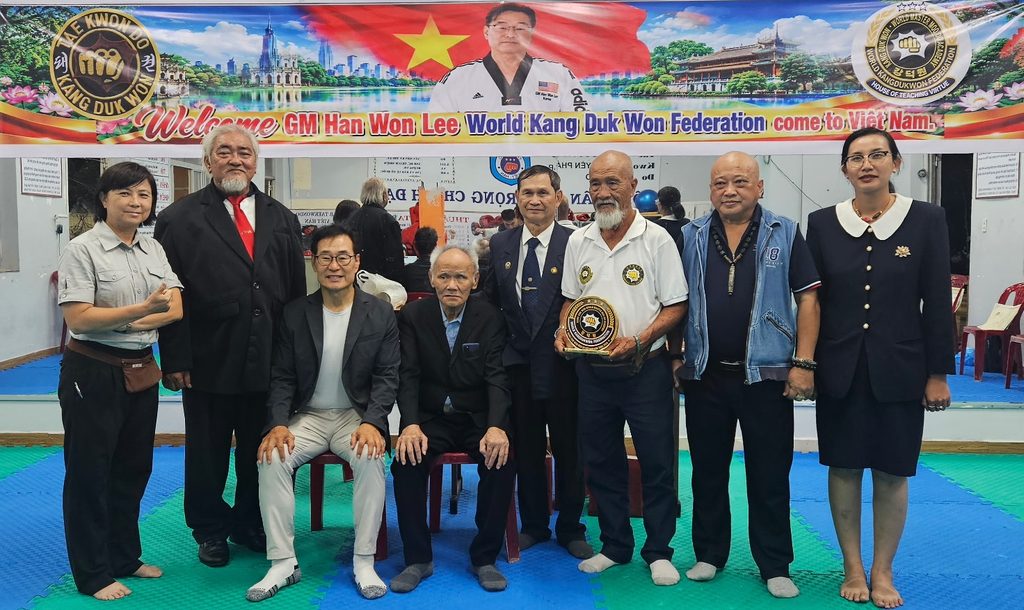
Grand Master Han Lee’s recent visit to Vietnam in October brought those relationships into a new phase. Through meetings in Ho Chi Minh City on October 8–9 and subsequent discussions in Hanoi, Lee met senior practitioners, recognized their contributions and heard their proposals for future cooperation. His presence offered an opportunity to connect years of local effort with the federation’s international leadership.
According to Grand Master Phạm Tiến Dũng, who helped organize the visit, the Vietnamese Kang Duk Won Moo Do organization was established on October 1, 2016, at the initiative of Grand Master Nguyễn Kim Châu. Its members include veteran teachers whose involvement in Taekwondo long predates that organization. Their concerns today encompass recognition of past service, support for current instruction and arrangements that can carry their work into the future.
Recognition and Personal Contact
Châu attended the October 8 gathering despite serious illness. Dũng reported that he made a considerable effort to welcome Lee because he attached great importance to the relationship with WKF. His participation linked the discussions about future development with respect for longstanding leadership.
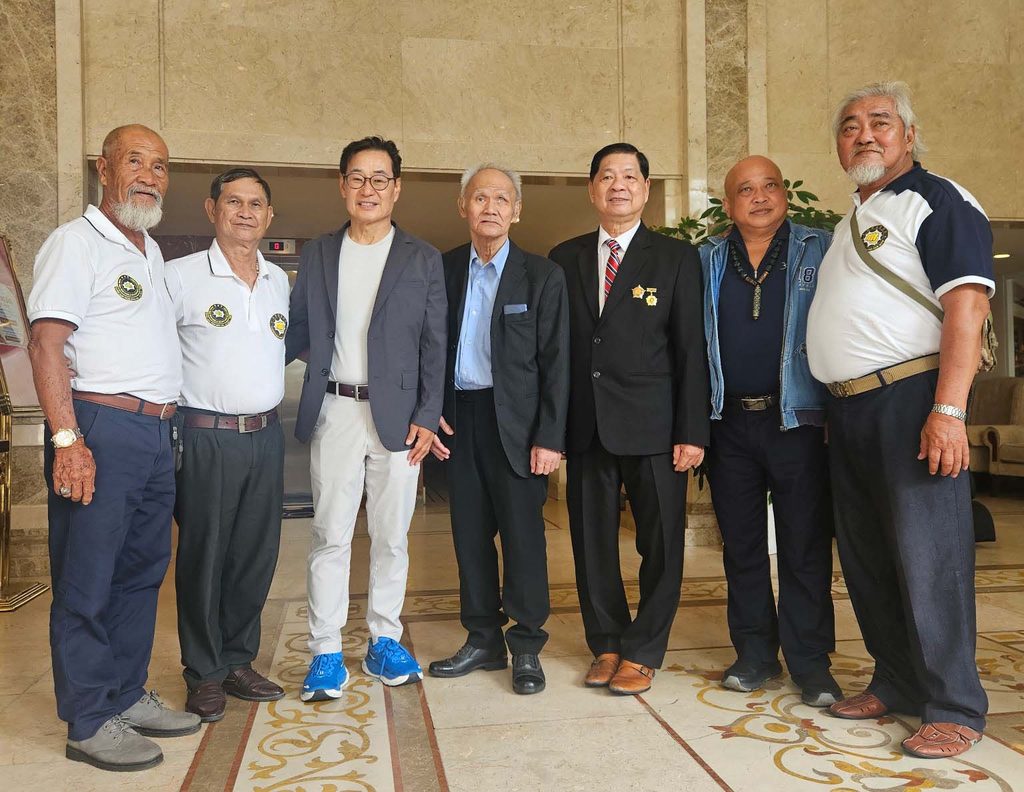
Historic encounter (left to right): Phạm Hữu Ngôi, Hoàng Xuân Sơn, Han Won Lee, Nguyễn Kim Châu, Phùng Kiến Lạc,
Lee presented certificates acknowledging contributions to Kangdukwon’s preservation and development. Recipients identified in the correspondence included Châu, Grand Master Phùng Kiến Lạc, Dũng, Grand Master Hoàng Xuân Sơn and Grand Master Lê Tiến Dũng. Master Hồ Thị Tú Trinh received a commemorative gift.
The certificates recognized service without conferring new dan ranks or organizational appointments. Their significance lay in the acknowledgment Lee personally extended to teachers who had sustained Kangdukwon activities in Vietnam.
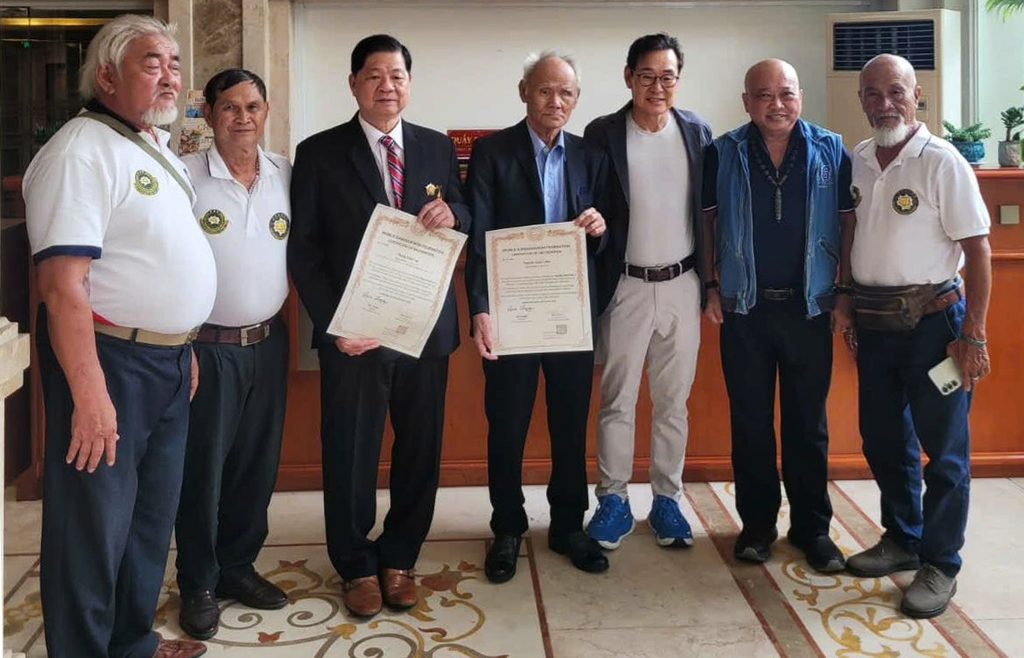
Historic encounter (left to right): Phạm Tiến Dũng, Hoàng Xuân Sơn, Phùng Kiến Lạc, Nguyễn Kim Châu, Han Won Lee, Lê Tiến Dũng, and Phạm Hữu Ngôi
Dũng described Lee as sincere and approachable, explaining that their conversations quickly developed a sense of familial warmth. Shared meals and informal exchanges helped establish familiarity alongside the formal proceedings.
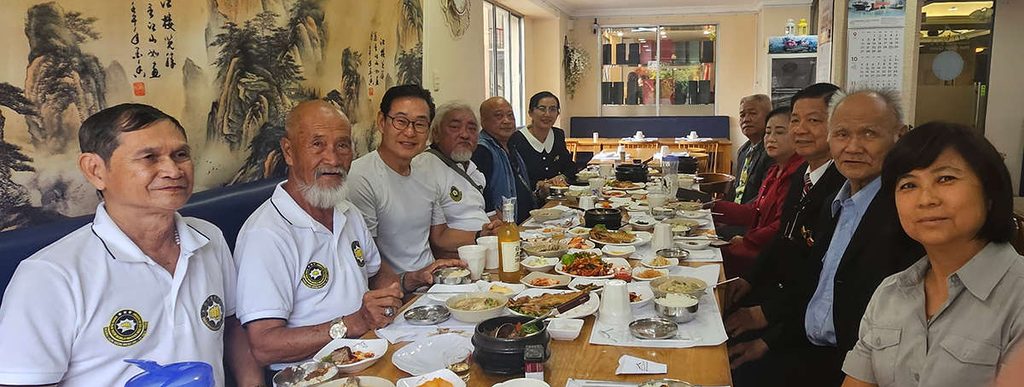
For a community seeking closer international relationships, that personal contact was an important beginning. Lee could hear participants explain their experiences in their own terms, while his hosts could become acquainted with the person who would help convey their circumstances to WKF leadership.
Practical Questions for the Future
At an evening meeting on October 8, Dũng invited participants to present their views on strengthening Kangdukwon activities. Those attending included Châu, Dũng, Hoàng Xuân Sơn, Lê Tiến Dũng, Grand Master Phạm Hữu Ngời, Hồ Thị Tú Trinh and Vũ Duy Trường, with an interpreter assisting communication.
Dũng proposed consideration of a Vietnam Kang Duk Won association alongside the existing Kang Duk Won Moo Do organization. He envisaged an association devoted to Taekwondo and sought consideration of an interim representative to coordinate activities and communication with WKF.
His other requests concerned the practical foundations of instruction: technical teaching materials, clear examination requirements, defined responsibility for issuing certificates and transparent fees. These proposals showed how international cooperation might benefit clubs beyond the recognition of their senior teachers.
Such questions require careful consultation. A representative must have the confidence of those whose work he or she coordinates. Examination procedures must be understood by instructors and candidates. Certification arrangements must establish responsibilities clearly enough to support consistent practice.
Lee’s visit gave him an opportunity to examine these needs firsthand. Written correspondence had brought proposals to WKF’s attention; direct discussions supplied a fuller human and organizational context for considering them.
During an outing on October 9, Dũng reported, Lee also asked about the Vietnamese organization’s use of the name Kang Duk Won Moo Do and its relationship to Taekwondo practice. The exchange highlighted the value of clarifying how colleagues understand their shared tradition, its teaching and its organizational identity.
Lee subsequently met four people involved in Kang Duk Won Moo Do activities in Hanoi, according to Dũng’s report. Those additional conversations widened his contact with the Vietnamese community and offered further perspectives for his assessment.
The Potential Significance
The visit’s greatest potential lies in the relationship it began to establish between local experience and international responsibility. Vietnamese teachers could explain what they needed from WKF, while Lee could consider how the federation might respond through workable arrangements.
Recognition is one part of that relationship. Technical guidance, reliable communication and clear administrative procedures are others. Together, they could help experienced teachers preserve their achievements while giving younger instructors and students a more dependable foundation for development.
Continuity deserves particular care. Châu’s attendance demonstrated his commitment to the relationship, while his illness lent urgency to discussions about future coordination. Respecting his contributions and preparing effective arrangements for the years ahead are responsibilities that must be approached together.
Several matters remained under consideration after the visit. Dũng reported that Lee would consult Great Grand Master Hwa Chong and me before a formal decision on a proposed cooperation agreement. Selection of a Vietnamese representative also required WKF agreement.
Dũng further reported encouraging comments from Lee about future ninth-dan certification. Those expectations should be distinguished from completed promotions: the correspondence does not establish that the anticipated certificates had been issued.
One early practical result emerged through publicity. Dũng reported that a club learned about Lee’s reception through Facebook, requested affiliation and invited him to attend its grading examination. He described a club with 30 regular practitioners and 20 examination candidates, with Hồ Thị Tú Trinh assisting in their assessment.
That response offers a modest but concrete indication of what greater visibility can accomplish. International engagement becomes meaningful locally when it encourages teachers and students to participate.
Grand Master Lee’s first visit created an opportunity to build such engagement on personal knowledge and mutual respect. Its enduring importance will depend on the work that follows: maintaining communication, considering proposals fairly and developing cooperation that serves the people teaching and practicing Kangdukwon in Vietnam.